Let’s talk about extreme dental anxiety
If you are one of the 48 percent of Americans suffering from extreme dental anxiety, it’s no secret that a dental visit can be traumatic.
And that’s not even the worst news. Severe dental anxiety can influence a sufferer’s quality of life and oral health. About 73 percent of those surveyed with dental anxiety had difficulty even going to a dental treatment appointment, which has vast and terrible repercussions on your teeth and gums.
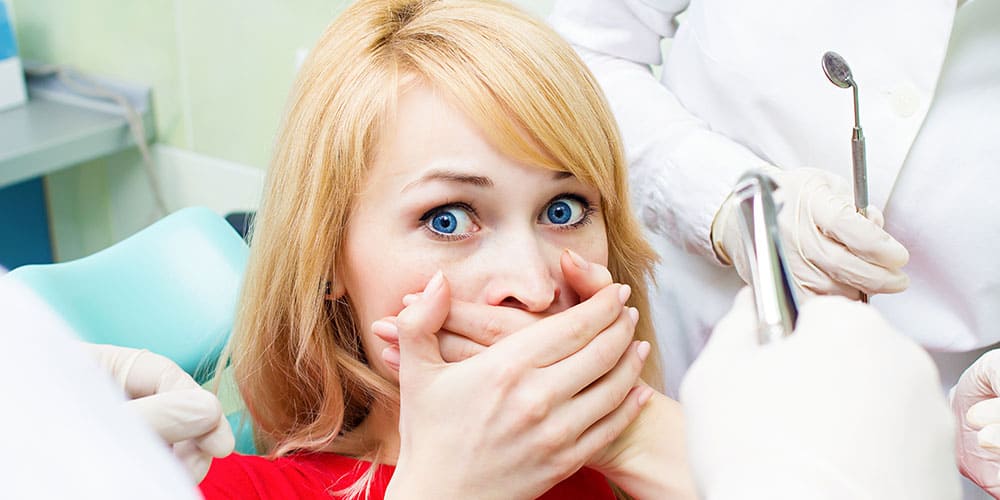
What is dental anxiety?
Dental anxiety comes in two flavors: anxiety and phobia.
Dental anxiety refers to the feeling of uneasiness during dental procedures. Most people can live with the feeling of anxiety, but some people experience extreme unease coupled with exaggerated or unfounded worries and fears.
The hallmark of dental anxiety lies in the feeling of a lack of control while sitting in the dentist’s chair undergoing dental work.
Dental phobia (also called dentophobia or odontophobia), on the other hand, leans toward a general feeling of agitation or shame. These people are so terrified of the dentist that they will go to any means to escape from their appointment.
Phobia, which means an irrational fear, forces these people to avoid dental appointments, sometimes for years. It can be at their own expense, resulting in gum infections, pain, and unappealing teeth.
In addition to having a higher risk of dental problems, this phobia often takes a toll on the person’s self-esteem and overall perception of themselves. Which is something that we, as dentists, always want to avoid!
Dental anxiety management
Before we discuss how you can cope with dental anxiety, let’s look at some of the reasons that people are afraid in the first place. See if any of these reasons feel familiar to you:
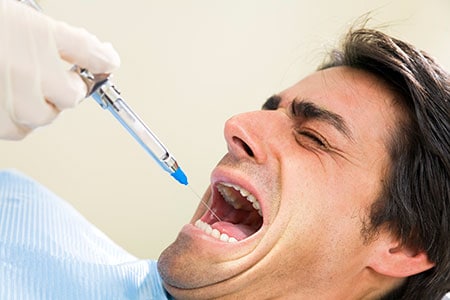
Pain
Oftentimes, people have what they consider to be a traumatic experience at the dentist when they were children. Or they hear about an awful incident of a friend or family member.
Fear of the jab
Some people just plain old don’t like needles (who does?). This can be particularly true when said needle is going directly into your mouth. Others worry that the numbing medicine won’t have taken effect before the procedure begins.
Numbing side effects
Most often, the main side effect of numbing medicine is a reduced feeling in the mouth, which is just what you want. Other consequences include dizziness, feeling faint, and nausea, which is much less appealing
Loss of control
Sitting in a dentist’s chair with your mouth wide open can be difficult to accept. You really can’t even see what’s going on.
Loss of personal boundaries
Many people don’t like the proximity of the dentist to their bodies.
How to deal with dental anxiety
It’s not news that people with a fear of dentists and dental anxiety feel that something dreadful is going to happen as soon as they enter the dentist’s door. This can evoke physical, cognitive, emotional, and behavioral responses. Ironically, any of these responses can increase pain perception.
Patients with dental anxiety often have responses that can include:
- Sweating
- Rapid heartbeat
- Low blood pressure that can lead to fainting
- High blood pressure
- Crying or signs of panic
- Using humor to mask fear
How to get over dental anxiety
When wondering how to overcome fear of dentists, the goal is to not alleviate all fear but, instead, learn to cope with it. The dental anxiety treatment options below may seem simple, but not always easy for everyone. Your mouth, teeth, and gums will thank you for trying.
Important dental anxiety tips
Be open and realistic with your dentist. If you are experiencing negative feelings, speak with your dentist directly.

- Advise the office staff when you make your appointment that this is a scary experience for you. When you arrive, remind the office of your phone call.
- Feel free to ask your dentist questions! Many times, as you become more informed, you can increase your feeling of being in control. Knowledge tends to decrease nervousness.
- Come up with an agreed-upon communication strategy with your dentist. If at any time you need a break, let the dentist know.
- If you experience pain, speak up! The dental experience is not meant to be a form of torture.
Just because you are at the dentist physically, doesn’t mean your mind can’t be elsewhere.
- Bring your headphones and play your favorite music or podcast while the dentist is doing his work. Many dentists also offer patients the opportunity to watch DVDs during their procedures.
- Bring a small, handheld object to gently squeeze while in the chair. Fidget spinners also work.
- Do some creative visualization. Pick a place you’d rather be (like the Bahamas) and transport yourself there.
Practice conscious awareness to relax the mind
- Mindful breathing can go a long way toward reducing stress. Count to five while you inhale, hold your breath and count to five, and then exhale and count to five. Try it first in the dental office waiting room and then during breaks while you are in the chair.
- Relax your body one part at a time. Begin with your head and slowly work your way down to your toes.
Is there dental anxiety medication?
There are several effective anesthetics to help promote oral conscious sedation and relieve anxiety and pain. These medicines also reduce the gag reflex.
Sedation dentistry (also known as sleep dentistry) sometimes provides patients with chemical help to calm down. Dentists are allowed to prescribe dental sedation and can give you something to make your dental experience less anxiety-provoking.
The sedation methods most often prescribed to treat anxiety are part of the benzodiazepine family; their trade names are Valium, Xanax, and Ativan.
Be advised that the level of sedation required to reduce dental fears can vary greatly between patients.
Talk to your dentist about sedation dentistry options. Many times they will prescribe a form of sedation to help you sleep the night before, so at least you begin the process feeling bright-eyed and bushy-tailed.
Other types of sedation include nitrous oxide (laughing gas), IV sedation, and intravenous general anesthesia (usually used for major procedures such as root canals).
MD Periodontics are experts at soothing anxiety
Dental professionals Dr. Moshrefi, DDS, and Dr. Daneshmand, DDS, are board-certified periodontists and members of the American Academy of Periodontology. Their masterful dental care skills and state-of-the-art equipment enable them to perform extractions and other periodontal procedures with exceptional results and marginal discomfort. They always listen to their patients if they express feelings of anxiety.
We are currently accepting new patients and offer state-of-the-art procedures including ceramic dental implants, veneers, laser crown lengthening, bone grafting, periodontal maintenance, implant rehabilitation, and Invisalign® Clear Braces.
To schedule a consultation, click here or call us at (310) 859-9449. Your smile will thank you!
We are conveniently located to patients throughout Southern California and the Los Angeles area. Our Beverly Hills office is conveniently located near West Los Angeles, Culver City, West Hollywood, Downtown Los Angeles, Marina del Rey, Pacific Palisades, Malibu, Manhattan Beach, Sherman Oaks, and Encino.