Screw-Retained vs Cemented Dental Implant Crowns
A screw-retained implant crown attaches to your implant with a small screw, so we can lift it off later without harming it. A cemented implant crown is bonded onto a separate post, called an abutment, which gives a slightly more natural biting surface but is much harder to remove. Both options work well, and at MD Periodontics in Beverly Hills we choose between them based on where your implant sits, how it is angled, and how much service it may need over the years.
Most patients never hear this choice explained. However, it shapes how your implant is cleaned, repaired, and maintained for decades. Below we walk through both methods using photographs and an X-ray from one of our own cases, so you can see the difference rather than just read about it.
An implant crown can be screw-retained, allowing removal for future service, or cemented for a slightly more seamless look. At MD Periodontics in Beverly Hills, board-certified periodontists Dr. Abdy Moshrefi and Dr. Nazanin Daneshmand choose the method at the planning stage, based on the implant's position and angle, rather than leaving it to the laboratory.
A Real Case From Our Beverly Hills Practice
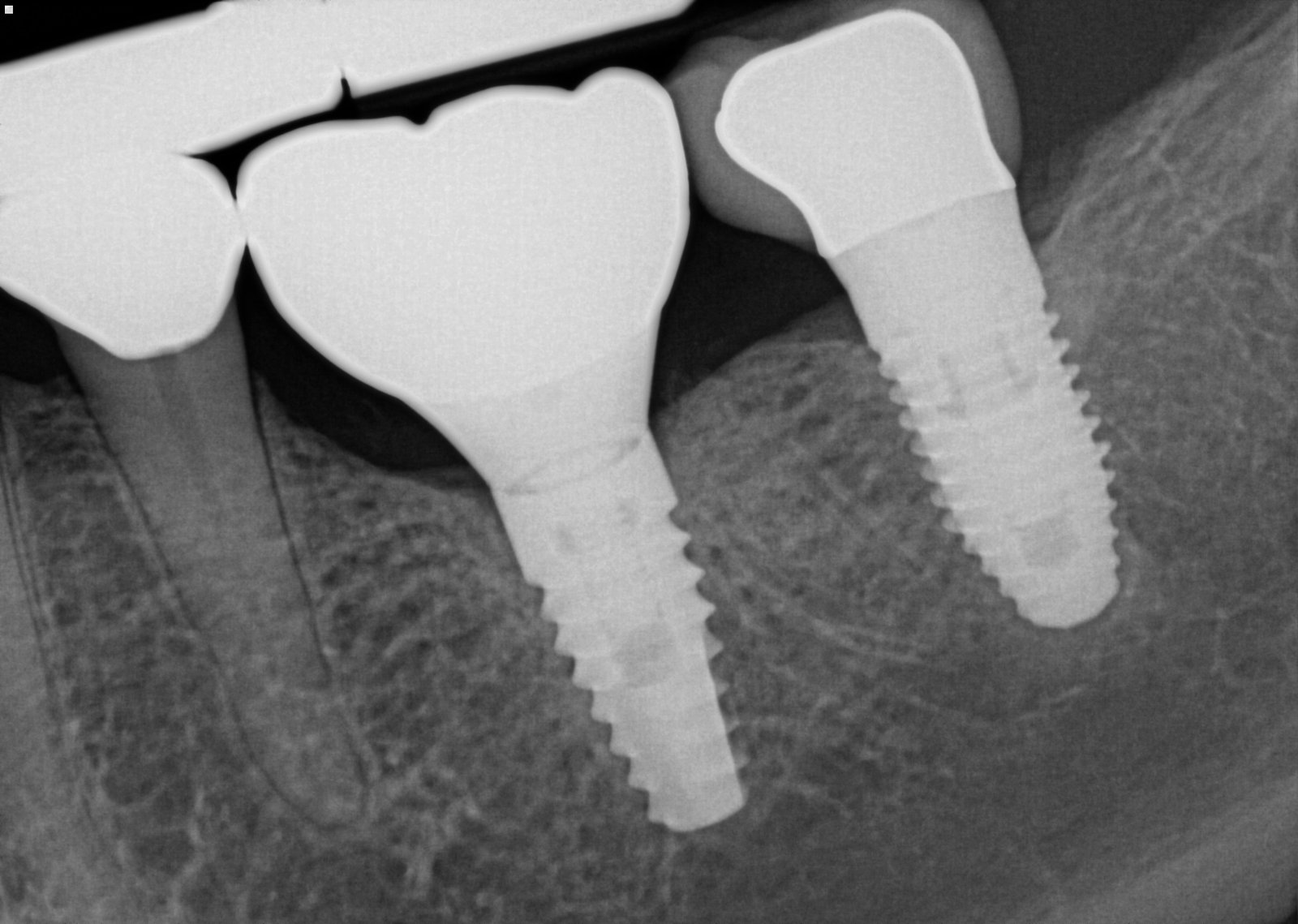
The images on this page come from a single patient treated in our office. In the lower left back section of the mouth, we restored two neighboring implants at the same time. One received a screw-retained crown. The other received a cement-retained crown on its own abutment.
Because both crowns sit side by side in the same quadrant, this case shows the two techniques more clearly than any diagram could. In addition, it reflects how we actually practice. We do not apply one method to every patient. Instead, we match the method to the site.
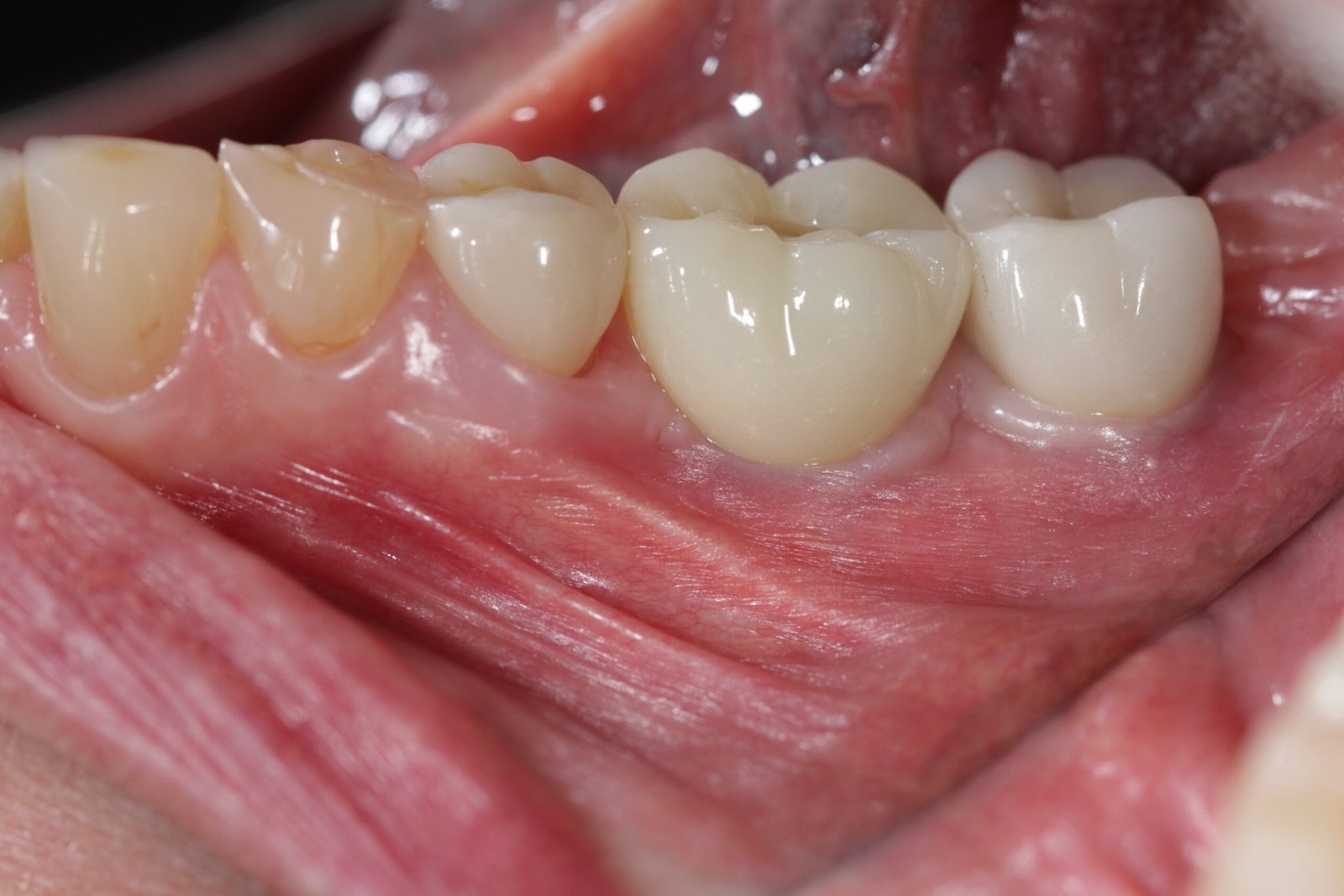
Screw-Retained Implant Crowns
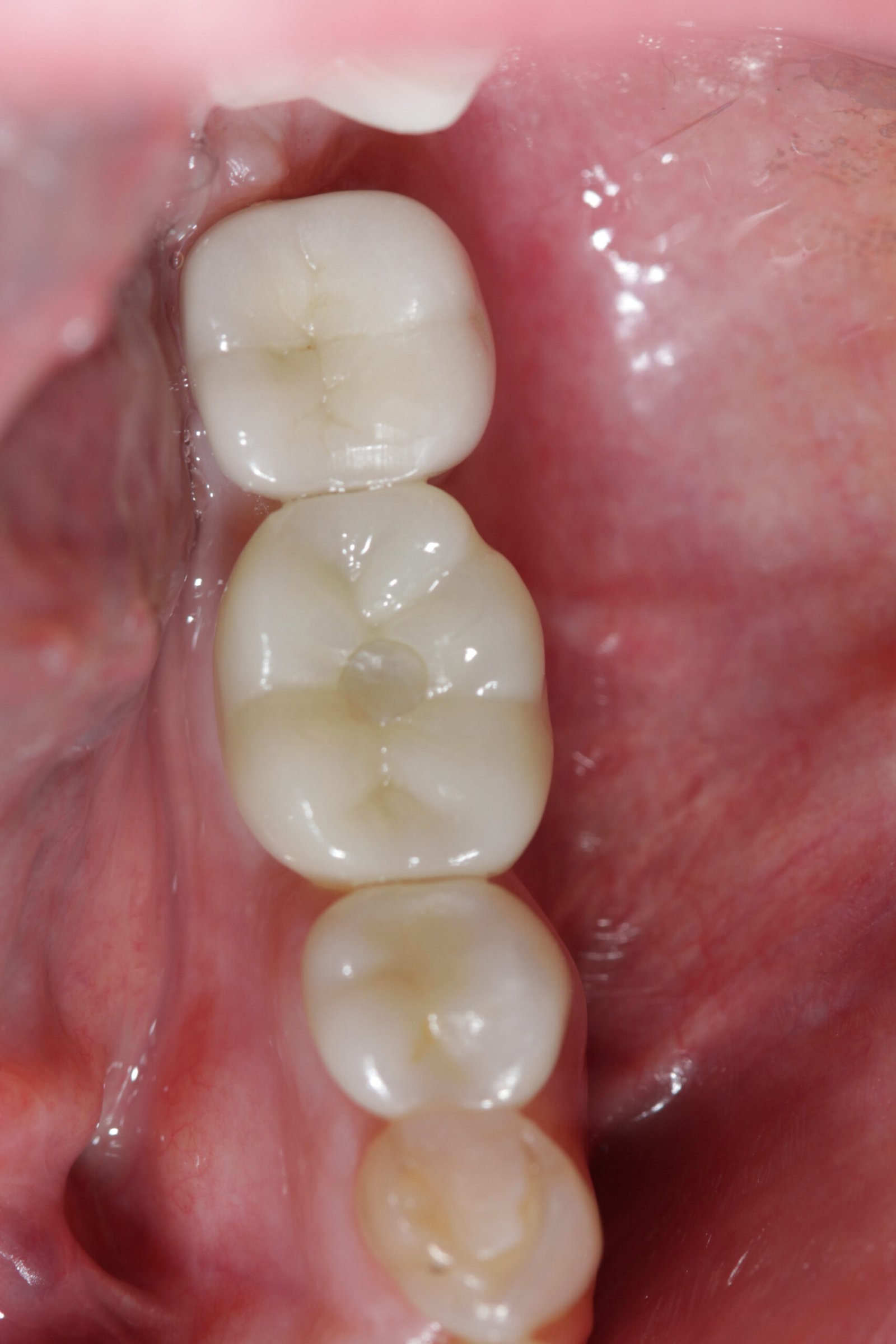
A screw-retained crown connects straight to the implant through a small channel in the chewing surface. First we tighten the screw to a set torque. Then we seal the opening with tooth-colored composite, so the crown looks and feels complete.
What we like about this approach:
- Fully retrievable. If the crown ever needs repair, or if we need to clean deeply around the implant, we simply remove the composite seal and back the screw out. The crown stays intact.
- No cement, no hidden risk. There is no bonding material under the gum line, so nothing can be left behind by accident.
- Easier long-term maintenance. Access matters when we monitor the bone and tissue around an implant year after year.
The trade-offs: the access channel sits in the chewing surface, which can slightly change the natural grooves of the tooth. Also, this method requires the implant to be placed at a favorable angle from the very beginning, so the channel comes out through the center of the tooth rather than through the front of it.
Cement-Retained Implant Crowns
A cement-retained crown is bonded onto a separate abutment that has already been secured to the implant. In other words, the process closely mirrors the way a traditional crown is placed on a natural tooth, which many restorative dentists find familiar and predictable.
What we like about this approach:
- Uninterrupted surface. Because there is no access channel, the full anatomy of the tooth is preserved. As a result, this method is often the better esthetic choice in the front of the mouth.
- More forgiving of angle. The abutment can correct a less than ideal implant angle before the crown goes on.
- Familiar workflow. The technique translates cleanly from conventional crown and bridge work.
The trade-offs: removal is difficult, and in many cases the crown has to be cut off. Just as important, every trace of extra cement must be cleared from below the gum line. Leftover cement is one of the most documented causes of inflammation and bone loss around implants, which is why this step demands real patience and a specialist's eye.
Why Leftover Cement Matters
Your gums do not attach to an implant the same way they attach to a natural tooth. Therefore, a small amount of trapped cement can sit against bone and tissue undetected for months.
That irritation does not stay local. Chronic inflammation in the mouth is linked to inflammation elsewhere in the body, which is part of why we treat implant maintenance as whole-body care rather than a cosmetic detail.
Side by Side Comparison
Looking down at the chewing surfaces, the difference becomes obvious. One crown carries a small sealed opening. The other does not.
In the back of the mouth, that opening is barely noticeable and no one sees it when you smile. In the front of the mouth, though, the same detail carries much more weight. For that reason, the location of the tooth often guides the decision as much as anything else.
| Factor | Screw-Retained | Cement-Retained |
|---|---|---|
| How it holds | A screw through the chewing surface | Dental cement on a separate abutment |
| Removing it later | Simple and non-destructive | Difficult, often requires cutting the crown |
| Risk of leftover cement | None | Present, so cleanup must be thorough |
| Appearance | Small sealed opening on top | Complete, uninterrupted surface |
| Implant angle needed | Must be planned precisely | More forgiving |
| Best suited to | Back teeth and higher maintenance cases | Front teeth and corrected implant angles |
How We Choose For You
We make this decision at the planning stage, long before a crown is ever made. Specifically, we look at four things.
- Where the tooth sits. Back teeth usually favor screw retention, since a sealed opening on a molar or premolar is invisible in everyday life.
- How the implant is angled. When we can place the implant along a favorable path, screw retention becomes the straightforward choice. When the bone dictates a different angle, an abutment lets us correct it.
- Your gum and bone health. If you have a history of gum disease or a higher risk of inflammation around implants, easy retrieval becomes far more valuable than a perfect chewing surface.
- What your smile shows. In the front of the mouth, we weigh appearance heavily, because your implant should be indistinguishable from the teeth beside it.
Because both of us are board-certified periodontists, we plan the implant and the crown together rather than in separate silos. That single habit prevents most of the compromises patients live with later.
Clinical Decision Factors
- Angulation drives retention type. A favorable axis with emergence through the central fossa points to screw retention. A compromised axis is more predictably managed with a custom abutment and cementation.
- Posterior sites tolerate access openings. Occlusal access in molars and premolars is esthetically forgiving, so retrievability can be prioritized without cosmetic cost.
- Residual subgingival cement remains a leading contributor to peri-implantitis. Where cementation is chosen, margin placement and cleanup protocol matter more than the cement itself.
- Retrievability should be weighted by risk profile. Patients with a periodontal history, complex maintenance needs, or full arch restorations benefit most from screw retention.
- Mixed quadrants are acceptable. As this case shows, the two techniques can sit adjacent to one another when each site is assessed on its own terms.
We welcome referrals for implant planning, complex peri-implant maintenance, and cases where retention strategy is still open. Please call us at (310) 859-9449.
Common Questions
Which implant crown is better, screw-retained or cemented?
Neither is better in every case. Screw-retained crowns win on retrievability and carry no cement risk, while cemented crowns win on appearance and are more forgiving of implant angle. The right answer depends on your specific tooth, your bite, and your gum health.
Can a screw-retained implant crown come loose?
A screw can loosen over time, especially under heavy bite forces. However, this is usually a simple fix. We remove the seal, retighten the screw to the correct torque, and reseal the opening in a single visit.
Will the screw opening show when I smile?
On back teeth, no. The opening sits on the chewing surface and is sealed with a tooth-colored material, so it is not visible in normal conversation or smiling. For front teeth, we plan differently and often choose a different approach.
What happens if cement is left under an implant crown?
Trapped cement irritates the gum and bone around the implant. Over time, that irritation can lead to swelling, bleeding, and bone loss, a condition called peri-implantitis. This is why cement cleanup has to be done carefully and checked, not assumed.
Can a cemented implant crown be removed if there is a problem?
Sometimes, but not easily. In many cases the crown must be sectioned and replaced. That is one of the main reasons we lean toward screw retention when a patient is likely to need ongoing access.
Is one type stronger than the other?
Both are strong enough for normal chewing when they are properly planned and made. Strength differences are far smaller than the differences in maintenance, so we rarely choose based on strength alone.
Does the type of crown change the cost?
Costs are usually similar, although a cemented crown adds a separate abutment. During your consultation we give you a written treatment plan with clear numbers before anything begins.
How long do implant crowns last?
With good home care and regular professional maintenance, implant crowns commonly last well over a decade, and many last much longer. Consistent cleaning around the implant matters more than the retention method.
Can a cemented crown be changed to a screw-retained crown later?
Often yes, if the implant angle allows it. We evaluate the position with imaging first, then let you know whether a new screw-retained crown is realistic.
Do you offer ceramic and zirconia options with both methods?
Yes. Both screw-retained and cemented crowns can be made in ceramic or zirconia. You can read more on our ceramic and zirconia dental implants page.
Talk Through Your Implant Options
If you are planning an implant, or you already have one and want a second opinion on how it was restored, we would be glad to look at it with you here in Beverly Hills.
Request an appointmentMD Periodontics, 9735 Wilshire Blvd, Suite 419, Beverly Hills, CA 90212. Call (310) 859-9449.