(310) 859-9449
 Why Your Gums Bleed During Flossing & When to Worry
Seeing a streak of pink in the sink after you floss can be startling. You are taking care of your teeth, trying to do the right thing, and suddenly, it looks like a scene from a movie you didn’t sign up for. I understand that moment of panic completely. As a periodontist treating patients here in Beverly Hills, I hear this concern almost every day. It is one of the most common questions I get: “Dr. Moshrefi, why are my gums bleeding when I floss, and should I be scared?”
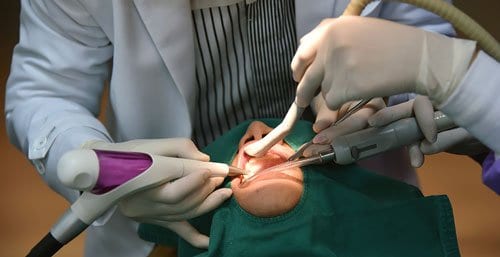
Proper evaluation is the first step to stopping the bleeding.
The short answer is that while bleeding gums are common, they are not “normal” in the sense that healthy tissue shouldn’t bleed. However, it is rarely a reason to panic. Instead, think of it as your body’s alarm system. It is a signal—a red flag waving to tell you that something needs your attention. In my practice, I focus on helping my patients interpret these signals so we can restore their oral health to the highest standard.
The Mechanics of Why Gums Bleed
To understand why bleeding gums flossing causes anxiety, we need to look at what is happening beneath the surface. Healthy gum tissue, or gingiva, should be firm and pale pink. It fits tightly around your teeth like a turtleneck sweater. When you floss against healthy gums, they are resilient.
However, when plaque—a sticky film of bacteria—builds up along the gumline, your immune system reacts. Your body sends blood cells to the area to fight off the bacteria. This rush of blood causes the tissue to become inflamed, red, swollen, and fragile. This condition is known as gingivitis. Because the tissue is engorged with blood and very tender, the slight pressure of a piece of floss is enough to break the surface and cause bleeding.
It is somewhat ironic: the bleeding often discourages people from flossing, but flossing is exactly what you need to do to stop the bleeding. When you stop flossing because of the blood, the bacteria party continues, the inflammation gets worse, and the cycle continues.
Is It Me, or Is It Disease?
Sometimes, the issue isn’t biology; it’s physics. If you are new to flossing, or if you have recently recommitted to the habit after a long break, your gums might just be sensitive. Additionally, aggressive flossing can physically traumatize the tissue.
If you “snap” the floss down between your teeth hard enough to hit the gum tissue, you can cut it. This is mechanical trauma, not necessarily disease. However, in my experience as a periodontist in Beverly Hills, the vast majority of bleeding cases are due to inflammation caused by inconsistent hygiene.
Common Causes of Bleeding Gums
- Gingivitis: The early stage of gum disease. It is reversible with good care.
- Medications: Blood thinners (anticoagulants) or aspirin can make you bleed more easily.
- Hormonal Changes: Pregnancy, known as “pregnancy gingivitis,” causes gums to be more reactive to plaque.
- Vitamin Deficiencies: Low levels of Vitamin C or K can impact gum health.
- Improper Restorations: Sometimes, an old filling or crown that doesn’t fit right can trap bacteria, causing localized bleeding.
The Data on Gum Health
You are certainly not alone in this struggle. According to the Centers for Disease Control and Prevention (CDC), 47.2% of adults aged 30 years and older have some form of periodontal disease. That is nearly half the adult population walking around with inflammation that could lead to bleeding.
This statistic highlights why I am so passionate about early detection. Many people assume bleeding is just a nuisance, but it is actually a marker of active infection in your mouth. If left untreated, that infection can spread to the bone supporting your teeth.
Visualizing the Progression: When to Worry
I often use charts to help my patients visualize where they stand on the spectrum of gum health. Understanding the difference between a minor issue and a major problem is key to knowing when to schedule an appointment at my office.
The Gum Health Spectrum
| Stage | Symptoms | Action Required |
|---|---|---|
| Healthy Gums | Pale pink, firm, no bleeding. | Maintain daily flossing and 6-month checkups. |
| Gingivitis | Red, puffy, bleeding when flossing. | Improve home care immediately; see a dentist. Reversible. |
| Periodontitis | Receding gums, pockets forming, bone loss. | Requires specialist intervention (Periodontist). Manageable, not reversible. |
Figure 1: Progression of Periodontal Health
The “Two-Week Rule”
So, when does bleeding gums flossing turn from a hygiene fix into a medical concern? I advise my patients to follow the “Two-Week Rule.”
If you haven’t flossed in a while, start doing it daily. Use the correct technique (which I will describe below) and be gentle. If the bleeding is simply due to a lack of flossing, the inflammation should subside, and the bleeding should stop within 10 to 14 days. As the bacteria are removed, the gums heal and toughen up.
However, if you have been flossing diligently every day for two weeks and your gums still bleed, or if the bleeding is heavy, spontaneous, or accompanied by pain, it is time to worry—or rather, it is time to act. This suggests that the tartar (hardened plaque) is deep below the gumline where your floss cannot reach. At this stage, professional intervention is necessary.
Why Seeing a Specialist Matters
In Beverly Hills and the greater Los Angeles area, you have many options for dental care. However, distinguishing between a general dentist and a periodontist is crucial when dealing with persistent gum bleeding. As a periodontist, I have undergone years of additional specialized training specifically in the diagnosis, treatment, and prevention of periodontal disease.
When patients come to me, they aren’t just getting a cleaning. They are getting a comprehensive periodontal evaluation. I look at the depth of the pockets around your teeth, the density of your bone, and the specific risk factors affecting your health. My goal is to save your natural teeth whenever possible and build a foundation for long-term health. If you are looking for the best periodontist in Beverly Hills to address these specific concerns, my team is equipped with the latest technology, including laser therapy, to treat gum disease non-invasively.
The Connection to Your Overall Health
One of the most compelling reasons to address bleeding gums is the connection between oral health and systemic health. Your mouth is the gateway to your body. When you have chronic inflammation in your gums, inflammatory markers can enter your bloodstream.
Research has shown correlations between periodontal disease and other serious health issues, including heart disease, diabetes, and even Alzheimer’s. Another data point to consider comes from the American Academy of Periodontology, which notes that men with gum disease are 49% more likely to develop kidney cancer, and 63% more likely to develop pancreatic cancer than those with healthy gums. While this sounds scary, the positive spin is that by treating your gums, you are actively supporting your total body health.
How to Floss Like a Pro (And Stop the Bleeding)
If you want to stop the “pink in the sink,” technique is everything. Many people simply slide the floss in and out, which cleans the contact point but misses the gumline where the bacteria live. Here is how I teach my patients to floss:
- The Length: Break off about 18 inches of floss. Wind most of it around one of your middle fingers. Wind the remaining floss around the same finger of the opposite hand. This finger will take up the floss as it becomes dirty.
- The Hold: Hold the floss tightly between your thumbs and forefingers.
- The Guide: Guide the floss between your teeth using a gentle rubbing motion. Never snap the floss into the gums.
- The C-Shape (Most Important): When the floss reaches the gum line, curve it into a C shape against one tooth. Gently slide it into the space between the gum and the tooth.
- The Motion: Hold the floss tightly against the tooth. Gently rub the side of the tooth, moving the floss away from the gum with up and down motions. Repeat this on the rest of your teeth.
Using an electric toothbrush in conjunction with proper flossing can also significantly reduce inflammation. If traditional floss is difficult for you to use due to dexterity issues or braces, water flossers are an excellent alternative that I highly recommend.
Advanced Treatments in Beverly Hills
If you have passed the two-week mark and are still seeing blood, do not be discouraged. Modern periodontics has come a long way. In my practice, we utilize minimally invasive techniques to remove the deep-seated bacteria that flossing cannot reach.
Scaling and root planing (often called a “deep cleaning”) is usually the first step. We numb the area and meticulously clean the root surfaces to remove bacterial toxins. This allows the gum tissue to reattach firmly to the tooth. For more advanced cases, we offer regenerative procedures to restore lost bone and tissue.
Taking Charge of Your Smile
Bleeding gums during flossing is a conversation starter between you and your body. It is asking for help. While it is easy to ignore in the hustle of daily life, addressing it is one of the best investments you can make in your longevity and confidence.
I take great pride in serving the Beverly Hills community and helping my patients achieve smiles that are not only beautiful but fundamentally healthy. Whether it is a simple correction of your flossing technique or a comprehensive plan to treat periodontal disease, there is always a solution.
If you are concerned about persistent bleeding, bad breath, or sensitive gums, I invite you to visit my practice. Let’s evaluate your gum health together and ensure that your smile remains bright, healthy, and blood-free for years to come. Your health is my priority, and I am here to help you navigate toward the best possible outcome.

Dr. Moshrefi, a board-certified periodontist, graduated from UCLA in 1995 with Phi Beta Kappa and Magma Cum Laude honors. He graduated from USC’s Dental School in 2002 with a doctoral and specialty training in Periodontics and has a Master of Science degree in craniofacial biology.
- Why Your Gums Bleed During Flossing & When to Worry - February 16, 2026
- How to Care for Dental Implants: Advice From the Professionals - June 25, 2024
- The Surprising Link between Diabetes and Gum Disease - May 17, 2024