(310) 859-9449
 What to Eat After Gum Graft Surgery: Week-by-Week Plan
What to Eat After Gum Graft Surgery: Week-by-Week Plan
There are few things that create more anxiety for my patients than the anticipation of oral surgery. Whether it is a connective tissue graft to cover exposed roots or a free gingival graft to thicken the gum tissue, the concern is rarely about the procedure itself—which is done under anesthesia—but rather the recovery. I often been asked by patients sitting in my chair, looking slightly worried, “Dr. Moshrefi, how am I going to eat? Will I starve?”
The answer is a resounding no. You will not starve, and in fact, proper nutrition is the fuel your body requires to vascularize the new graft and integrate it into your existing tissue. However, the days following your procedure are critical. One wrong bite of a tortilla chip or a jagged piece of crusty bread can disturb the delicate sutures and compromise the blood supply to the new graft. This guide is designed to take the guesswork out of your recovery.
As a periodontist who has performed thousands of these procedures at MD Periodontics, I have seen firsthand that patients who adhere to a strict nutritional protocol heal faster, experience less swelling, and achieve better aesthetic results. This is your comprehensive, week-by-week guide to your diet after gum graft surgery.

Understanding the Biology of Your Healing
Before we dive into the meal plans, it is helpful to understand what is happening biologically in your mouth. When we place a gum graft, we are essentially transferring living tissue from one area (usually the palate) or using a donor source to cover a defect. For this tissue to survive, it must establish a new blood supply. This process is called revascularization.
During the first few days, the graft is surviving solely on plasma circulation—a fluid diffusion process. This is the most fragile state. By day four or five, tiny capillaries start to bridge the gap between your existing gum bed and the new graft. If the graft moves due to the mechanical force of chewing, these tiny bridges can break, leading to graft failure or necrosis. This is why I emphasize that your diet is not just about comfort; it is a medical necessity to ensure the graft “takes.”
Furthermore, your body enters a hyper-metabolic state after surgery. It is actively building collagen and new tissue. This requires specific building blocks, primarily protein, Vitamin C, and Zinc. If you restrict your calories too severely because you are afraid to eat, you deprive your body of the materials it needs to heal, which can prolong your recovery time and increase the risk of infection.
The Pre-Op Preparation: Stocking Your Kitchen
Do not wait until you are groggy from sedation to go grocery shopping. Preparation is the key to a stress-free recovery. I recommend my patients go to the store two days before surgery and stock up on high-protein, soft consistency foods. You want foods that require zero chewing and are not acidic.
When you are shopping, look for Greek yogurt, eggs, avocados, smooth nut butters, protein powders (whey or plant-based), bone broth, and soft fruits like bananas. Avoid buying anything with seeds (strawberries, raspberries, everything bagels) or anything spicy. Having your refrigerator stocked ensures you won’t be tempted to order a pizza when hunger strikes post-surgery.
Week 1: The Liquid and “Mush” Phase
The first 24 to 48 hours are about managing inflammation and ensuring the blood clot remains stable. During this time, I generally recommend cold liquids. Cold helps constrict blood vessels, which minimizes bleeding and reduces swelling. It is also soothing to the surgical site.
Important Rule: Do not use a straw. The suction created by using a straw can dislodge the blood clot formed at the donor site (if tissue was taken from your palate) or disturb the graft itself. Drink directly from the cup or use a spoon.
Days 1-3: Strictly Liquids and Purees
In these first few days, your jaw may feel stiff, and you will not want to open your mouth very wide. Focus on nutrient-dense liquids. Smoothies are excellent, but you must blend them thoroughly. Do not use berries with small seeds. A seed getting stuck under your gum graft can cause an infection or graft failure.
A typical menu for these days might include:
- Breakfast: A high-calorie protein shake made with banana, milk (dairy or almond), protein powder, and smooth peanut butter. This provides fats and proteins immediately.
- Lunch: Cold gazpacho or a smooth, chilled cucumber soup. Avoid hot soups for the first 24 hours as heat can promote bleeding.
- Dinner: Cold apple sauce, yogurt, or pudding. Gelatin desserts are also fine, though they lack nutritional value.
Days 4-7: Introduction of Soft Solids
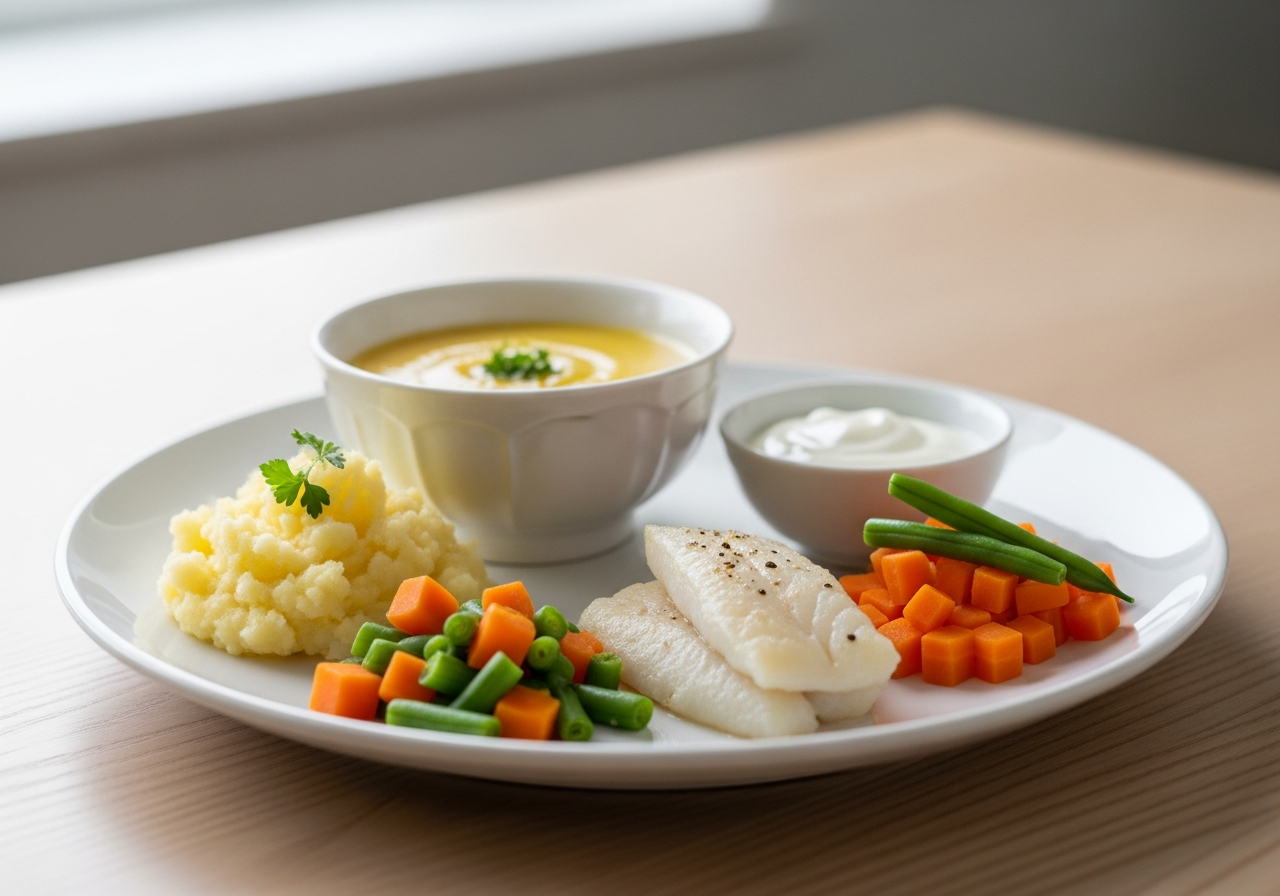
By day four, the initial fragility has passed, though the graft is still very delicate. You can switch from strictly cold foods to warm (not piping hot) foods. You can also move from liquids to “mushy” foods that can be swallowed with minimal manipulation.
The goal here is “fork-tender.” If you can mash it easily with the back of a fork, it is safe to eat. However, you must chew on the side of your mouth opposite the surgery. If you had surgery on both sides, you must stick to the liquid diet for a few more days until I give you the green light.
Your menu can expand to include:
- Scrambled Eggs: Cook them softly; do not overcook them until they are rubbery. Cheese can be added for extra calories.
- Mashed Potatoes: Ensure there are no large chunks. Sweet potatoes are packed with Vitamin A, which supports mucous membrane health.
- Oatmeal: Let it soak until very soft. Do not add nuts or granola.
- Flaky Fish: A soft white fish like tilapia or cod, baked or poached, is usually safe if you are careful.
Optimizing your diet after gum graft surgery for faster healing
While texture is the primary concern for mechanical safety, nutrient density is the primary concern for biological healing. I often see patients who survive on Jell-O and ice cream for a week. While this is “safe” for the graft, it is terrible for the immune system. Sugar is inflammatory. To optimize your healing, you need to treat your diet like a prescription.
A diet after gum graft surgery should be rich in anti-inflammatory foods and collagen precursors. Collagen is the main structural protein in your gum tissue. While eating collagen directly (like in bone broth) is helpful, your body also needs Vitamin C to synthesize its own collagen.
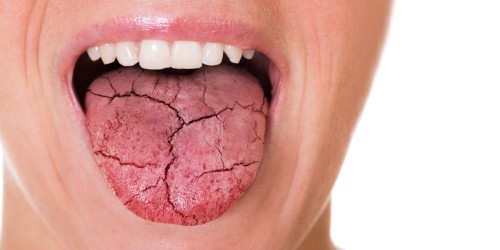
Consider incorporating a high-quality bone broth into your daily routine starting on day three. It is rich in amino acids like glycine and proline, which are essential for tissue repair. Additionally, ensure you are getting enough hydration. A dry mouth (xerostomia) is a breeding ground for bacteria. Keeping well-hydrated helps maintain saliva production, which contains natural enzymes that protect your teeth and gums.
Two Scientific Facts to Keep in Mind
First, it is scientifically proven that nicotine constricts blood vessels and significantly impairs revascularization. Patients who smoke have a much higher rate of graft failure. It is imperative to avoid smoking during this dietary phase.
Second, the bridging of capillaries—the connection of blood vessels between your gums and the graft—typically begins to organize around day 4. This biological timeline dictates why we transition from liquids to soft foods exactly at this window; we are matching your diet to your physiology.
Scientific Data on Recovery Nutrition
Below is a breakdown of specific nutrients and their role in your post-operative success.
| Nutrient | Role in Gum Graft Healing | Recommended Soft Sources |
|---|---|---|
| Protein | Essential for cell proliferation and tissue reconstruction. | Greek yogurt, cottage cheese, protein shakes, soft scrambled eggs. |
| Vitamin C | Critical cofactor for collagen synthesis and immune function. | Mango smoothies (blended well), mashed papaya, broccoli soup. |
| Vitamin A | Supports the maintenance of mucosal tissues (gums). | Mashed sweet potatoes, pureed carrots, butternut squash soup. |
| Zinc | Aids in DNA synthesis and cell division during wound repair. | Ground beef (very fine), beans (mashed), yogurt. |
Week 2: The Transition Phase
Congratulations, you have made it through the hardest week. By week two, the stitches are usually still in place (unless they are dissolvable), but the gum tissue has begun to attach more securely. The swelling should have subsided significantly, and the risk of bleeding is low.
During week two, you can begin to introduce foods with slightly more texture. Pasta is a favorite during this week. Macaroni and cheese, overcooked penne with marinara sauce, or risotto are excellent options. The key is that the food should still be soft enough that it practically falls apart in your mouth.
You can also reintroduce soft vegetables. Steamed vegetables like zucchini, squash, or carrots are perfect. Avoid stringy vegetables like celery or asparagus, as the fibers can get caught in the sutures. If you eat meat, ground chicken or turkey in a sauce is acceptable, provided you continue to chew on the non-surgical side.
Specific Statistics on Compliance
Studies in periodontal literature suggest that patient compliance with post-operative instructions, specifically regarding mechanical trauma (eating hard foods), is the single biggest variable in graft success. In fact, research indicates that Connective Tissue Grafts have a success rate exceeding 90% regarding root coverage, provided the site is undisturbed during the first 14 days.
Conversely, early trauma to the site—such as a tortilla chip stabbing the gum—can result in a localized dehiscence (opening of the wound) in nearly 100% of cases where the trauma is severe enough to sever the new capillary bed.
Weeks 3 and 4: Returning to Normalcy
By the third week, healing is well underway. The surface epithelium is keratinizing (toughening up), and the connective tissue attachment is maturing. Depending on the type of graft and your body’s healing speed, I may remove your sutures around this time.
You can slowly return to a normal diet, but exercise caution. While you can eat sandwiches, burgers, and firmer fruits, you should still avoid the “Danger Zone” foods for at least another month. The tissue may look healed, but the maturation of the collagen fibers takes weeks to complete fully.
Foods to Strictly Avoid (The Danger Zone)
Regardless of how well you feel you are healing, there are certain foods you must avoid for at least 4 to 6 weeks. These foods pose a mechanical threat to the surgical site.
- Crunchy Foods: Popcorn, chips, pretzels, and nuts are strictly forbidden. Sharp shards can easily pierce the healing gum tissue.
- Sticky Foods: Caramel, gummies, and taffy can pull at the graft or sutures.
- Small Seeds: Strawberries, raspberries, sesame seeds (often on burger buns), and poppy seeds. These are the most dangerous because they are small enough to lodge under the gum line and cause an abscess.
- Acids and Spice: While not mechanically dangerous, highly acidic foods (like straight citrus juice) or very spicy foods can cause significant pain and irritation to the healing wound.
Managing Discomfort and Hygiene While Eating
Eating when your mouth is sore can be a challenge. I recommend taking your prescribed pain medication or an over-the-counter anti-inflammatory roughly 30 minutes before a meal. This makes the mechanics of eating much more comfortable.
Hygiene is also tricky. You cannot brush the graft site for the first couple of weeks. Food debris will naturally accumulate on your teeth. Do not panic. I usually prescribe a Chlorhexidine mouth rinse. Use this gently—do not swish vigorously. Just tilt your head to let the liquid bathe the surgical site. This chemical plaque control keeps the area clean without the mechanical trauma of a toothbrush.
For more information on periodontal health and recovery, the American Academy of Periodontology offers excellent resources. Additionally, Mayo Clinic provides general overviews of oral surgery recovery standards.
Next Steps for Your Smile
Recovery from gum graft surgery is a marathon, not a sprint. The dietary sacrifices you make in the first two weeks pay dividends for years in the form of a healthy, stable, and aesthetically pleasing gum line. It is a small investment of time for a permanent improvement in your oral health.
If you are experiencing gum recession, sensitivity, or are unhappy with the appearance of your gums, do not wait until the problem requires extensive intervention. Gum recession does not improve on its own; it requires expert care to correct.
About Dr. Abdy Moshrefi
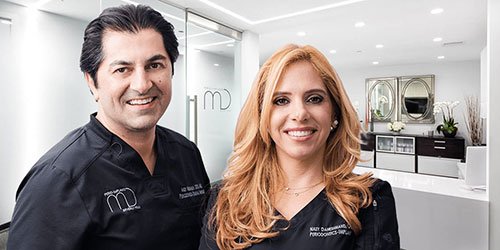
Dr. Abdy Moshrefi, D.D.S., is a board-certified periodontist and a leading expert in the field of soft tissue reconstruction and implant dentistry. With a practice based in Beverly Hills, Dr. Moshrefi is renowned for his meticulous microsurgical techniques that minimize discomfort and maximize aesthetic outcomes. He is dedicated to providing top-tier periodontal care to patients in the Los Angeles area, focusing on saving teeth and restoring confidence through advanced regenerative therapies.
Restore Your Gum Health Today
Are you in the Los Angeles or Beverly Hills area and concerned about gum recession? We are here to help you achieve the healthy smile you deserve with the most advanced, minimally invasive techniques available.

Dr. Moshrefi, a board-certified periodontist, graduated from UCLA in 1995 with Phi Beta Kappa and Magma Cum Laude honors. He graduated from USC’s Dental School in 2002 with a doctoral and specialty training in Periodontics and has a Master of Science degree in craniofacial biology.
- What to Eat After Gum Graft Surgery: Week-by-Week Plan - April 12, 2026
- Crown Lengthening vs Veneers for a Gummy Smile - April 6, 2026
- How Long Do Dental Implants Last? Longevity Guide - March 9, 2026